Indication
This medication is used to treat hyperprolactinemia, whether the cause is unknown or due to a prolactin-secreting tumor. It may also be prescribed to help manage symptoms of Parkinson’s disease, either on its own during early treatment or alongside levodopa in later stages.
Mechanism of Action
Cabergoline is a long-acting dopamine D2 receptor agonist. When D2 receptors on pituitary lactotroph cells are stimulated, they reduce the activity of adenylyl cyclase, which lowers cAMP levels inside the cell. This drop in cAMP limits calcium release from intracellular stores and reduces calcium entering the cell through voltage-gated channels. The result is a decrease in prolactin secretion.
Cabergoline also interferes with MAPK/ERK signaling pathways by reducing phosphorylation through c-Raf and B-Raf inhibition.
In the nigrostriatal pathway, D2 activation supports smoother motor control, which is why the drug helps with Parkinsonian symptoms.
Receptor-binding studies show that cabergoline has strong affinity for D2 receptors and only weak activity at D1 receptors, adrenergic receptors, and several serotonin receptor subtypes.
Side Effects
Some people may experience nausea, stomach upset, vomiting, constipation, dizziness, or fatigue. If these symptoms last or worsen, contact your healthcare provider. Standing up slowly can help reduce dizziness or lightheadedness.
Precautions
Let your doctor or pharmacist know if you have allergies to cabergoline, other ergot-based drugs, or any inactive ingredients in the medication. Because this medicine may cause dizziness, alcohol and cannabis can intensify the effect. Avoid driving or operating machinery until you know how the medication affects you. Speak with your doctor if you use cannabis or drink alcohol.
Drug Interactions
Medicines that may interact with cabergoline include lorcaserin, metoclopramide, and prochlorperazine. Always give your healthcare provider a full list of medications and supplements before starting therapy.
Dosage
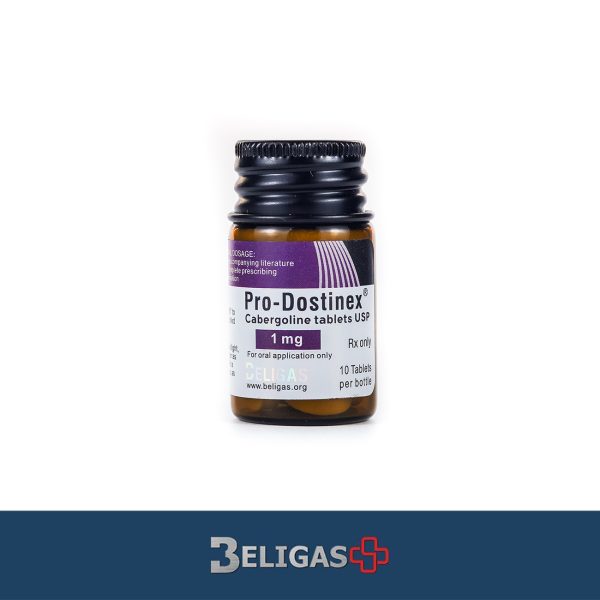
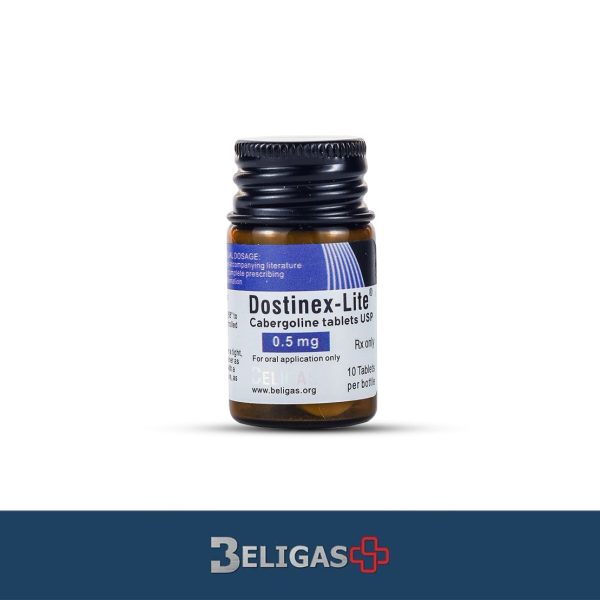
For hyperprolactinemia, the usual starting dose ranges from 0.5 mg to 1 mg taken once or twice per week. Doses may be adjusted based on response and tolerance. Some patients may require up to 3 mg per week. Follow your healthcare provider’s instructions closely and attend routine check-ups for monitoring.
Storage
Keep the tablets in a cool, dry place at room temperature. Do not refrigerate. Store out of reach of children.
Prescription Requirement
This medication must only be used under medical prescription and supervision.
Regulatory Compliance
Manufactured according to applicable regulatory requirements.
Produced in a GMP-certified facility.
Safety Information
If too much is taken, seek medical help right away.
Report any unexpected symptoms or side effects to your healthcare provider.
Q: Why do the tablets have spots or color differences?
A: These small variations come from the natural raw materials used in production. They’re normal and do not affect how the medication works. Every batch is thoroughly tested for purity, potency, and safety. The slight color differences are simply a result of minimal processing and do not indicate any defect.