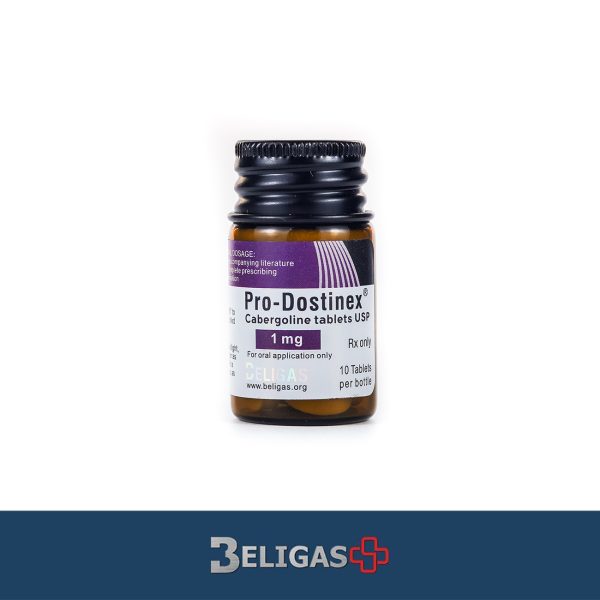
Pro-Dostinex 1mg
Pro-Dostinex 1mg contains cabergoline, a dopamine agonist used to bring elevated prolactin levels back into a normal range. It’s commonly prescribed for prolactin-secreting pituitary tumors, hormone-related imbalances, and cases of steroid-induced gynecomastia. Lowering prolactin can help restore libido, improve sexual function, and support healthier testosterone levels in men. Typical dosing ranges from 0.25 mg to 0.5 mg twice per week, taken under medical supervision to limit possible reactions like nausea, dizziness, or fatigue. Ongoing check-ups help ensure the treatment remains safe and effective.
How It Works
Cabergoline acts by activating dopamine receptors in the brain. Dopamine naturally suppresses prolactin release, so stimulating these receptors reduces the amount of prolactin produced by the pituitary gland. When prolactin levels fall, symptoms such as breast tissue enlargement, low libido, and suppressed testosterone production often improve. This helps rebalance hormones and supports better reproductive function.
Use and Dosage
Most individuals start with 0.25–0.5 mg taken twice weekly. The exact amount should be personalized by a healthcare provider after reviewing hormone levels and overall health. Beginning with the lowest effective dose helps reduce stomach upset or lightheadedness. Taking the tablet with food can ease any digestive discomfort. If needed, the dose may be adjusted gradually. Routine bloodwork to track prolactin levels is recommended throughout treatment.
Benefits
-
Lowers elevated prolactin
-
Helps reduce steroid-related gynecomastia
-
Supports improved libido and sexual function
-
May help restore normal testosterone production
-
Useful for managing prolactinomas and other prolactin-related disorders
Side Effects
Some people experience nausea, dizziness, tiredness, headaches, or mild stomach issues. A drop in blood pressure may occur, especially when standing up quickly. Rare but serious risks include potential effects on heart valves or fibrotic changes in organs such as the lungs or liver. Starting with a low dose and monitoring regularly reduces these risks. Heart evaluations and medical follow-ups are recommended during longer-term use.