Mechanism of Action:
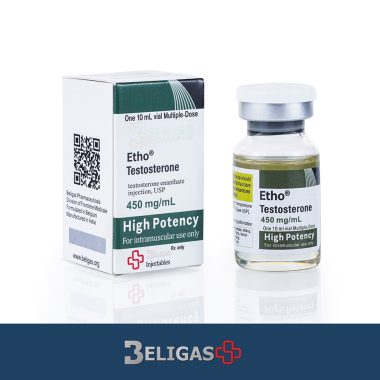
Testosterone (Etho® – Testosterone 450mg) produces its effects through two major pathways. It activates androgen receptors—either directly or after being converted into DHT—and it can also be transformed into estradiol, which then binds to estrogen receptors. Once free testosterone enters the cytoplasm of a target cell, it either attaches to the androgen receptor or is converted to 5-alpha-dihydrotestosterone by the enzyme 5-alpha-reductase.
DHT has a stronger binding affinity than testosterone, giving it significantly greater androgenic activity. After binding, the testosterone- or DHT-receptor complex shifts in structure, moves into the cell nucleus, and attaches to specific DNA regions known as hormone response elements. These areas help regulate gene transcription and ultimately produce androgen-related effects.
Androgen receptors are present across a wide range of vertebrate tissues, and both sexes respond to similar hormone levels. Differences in testosterone exposure during fetal development, puberty, and adulthood contribute to the distinct biological characteristics of males and females.
Indications:
Men: Testosterone Enanthate is prescribed when there is little or no natural testosterone production. This includes primary hypogonadism caused by undescended testes, torsion, orchitis, vanishing testis syndrome, or surgical removal of the testes. Long-term therapy may be needed to maintain normal male traits in individuals who develop hormone deficiency after puberty.
It may also be used to help initiate puberty in boys with significant but non-pathological pubertal delay. Short-term, low-dose treatment can be considered if psychological support alone does not lead to normal development. Because androgens can affect bone growth, hand and wrist X-rays every six months are recommended to monitor bone age.
Women: Testosterone Enanthate can be used as a secondary treatment for postmenopausal women with progressive, inoperable metastatic breast cancer. Treatment aims to reduce estrogen activity, often alongside other methods such as adrenalectomy, antiestrogen therapy, or hypophysectomy. It may also be used in certain premenopausal cases when the tumor is hormone responsive and ovaries have already been removed.
Decisions about androgen therapy in female cancer patients should always be made by an experienced oncologist. Testosterone has additionally been used to help relieve severe postpartum breast discomfort and engorgement.
Contraindications:
This medication must not be used by men with known or suspected prostate cancer or male breast cancer, or by women who are pregnant or could become pregnant. Androgen use during pregnancy can lead to varying degrees of virilization in a female fetus, including clitoral enlargement, atypical vaginal formation, and partial fusion of the genital folds. The risk is highest when exposure occurs in the first trimester. If pregnancy occurs during treatment, the patient should be informed of the potential fetal risk.
Drug Interactions:
Using oxyphenbutazone with androgens may increase oxyphenbutazone blood levels. In individuals with diabetes, testosterone may reduce glucose levels and lower insulin or oral antidiabetic medication requirements.
Dosage:
Testosterone Enanthate is administered via intramuscular injection only; it must never be injected intravenously. Injections should be delivered deep into the gluteal muscle.
Men: Dosage depends on age, diagnosis, and clinical response. Maintenance therapy should use the lowest dose that provides adequate results. Standard testosterone-replacement doses range from 50 to 400 mg every 2–4 weeks, with adjustments made by the prescribing clinician.
For non-medical physique or performance enhancement, typical doses fall within 300–600 mg per week.
Women: For palliation of inoperable breast cancer, some patients may benefit from 50–100 mg weekly, depending on the treatment plan established by the oncologist.
Storage:
Keep in a cool, dry, dark place at room temperature. Do not refrigerate. Store out of children’s reach.
Regulatory Compliance:
• Produced following applicable regulatory standards
• Manufactured under certified Good Manufacturing Practices (GMP)
Safety Information:
• Seek medical help immediately if an overdose is suspected
• Report any side effects or unexpected reactions to a healthcare professional
• Prescription medication—use only under the supervision of a licensed provider